Manufacturing CMMS Software for Equipment Monitoring

Manufacturing CMMS Software for Equipment Monitoring

Manufacturing CMMS is an essential solution for modern manufacturers who want to optimize their maintenance operations while maintaining consistent production performance. In today’s competitive manufacturing environment, companies can no longer rely on outdated systems to manage equipment reliability. Manufacturing CMMS provides a centralized platform to manage maintenance activities, track assets, schedule preventive maintenance, and reduce unexpected downtime across production facilities.

Manufacturing CMMS helps organizations transition from reactive maintenance to preventive and planned maintenance models.

  1. Manufacturing CMMS For Downtime Prevention
  2. CMMS For Automated Manufacturing Plants
Rather than dealing with costly equipment failures, maintenance teams can address maintenance needs proactively. This improves uptime and helps ensure that production lines operate smoothly without interruption. Manufacturing CMMS plays a vital role in supporting operational efficiency and long-term equipment performance.

One of the key benefits of Manufacturing CMMS is preventive maintenance automation. Manufacturing CMMS for Industrial Maintenance Planning . Manufacturers can schedule maintenance tasks based on time, usage, or condition. This approach extends equipment lifespan while lowering overall maintenance costs. Manufacturing CMMS ensures that maintenance activities are consistent, documented, and aligned with production demands.

With Manufacturing CMMS, manufacturers gain complete insight into asset lifecycle data. Maintenance teams can access service records, warranties, manuals, and inspection logs from a single system. Having accurate asset data helps manufacturers make informed maintenance decisions. Manufacturing CMMS helps organizations protect their investments and maximize return on equipment assets.

Work order management is another critical function of Manufacturing CMMS. Maintenance requests can be submitted, assigned, prioritized, and completed within the system. This reduces paperwork and improves communication between maintenance teams and operations staff. Manufacturing CMMS helps ensure that no task is missed and every maintenance activity is properly documented.
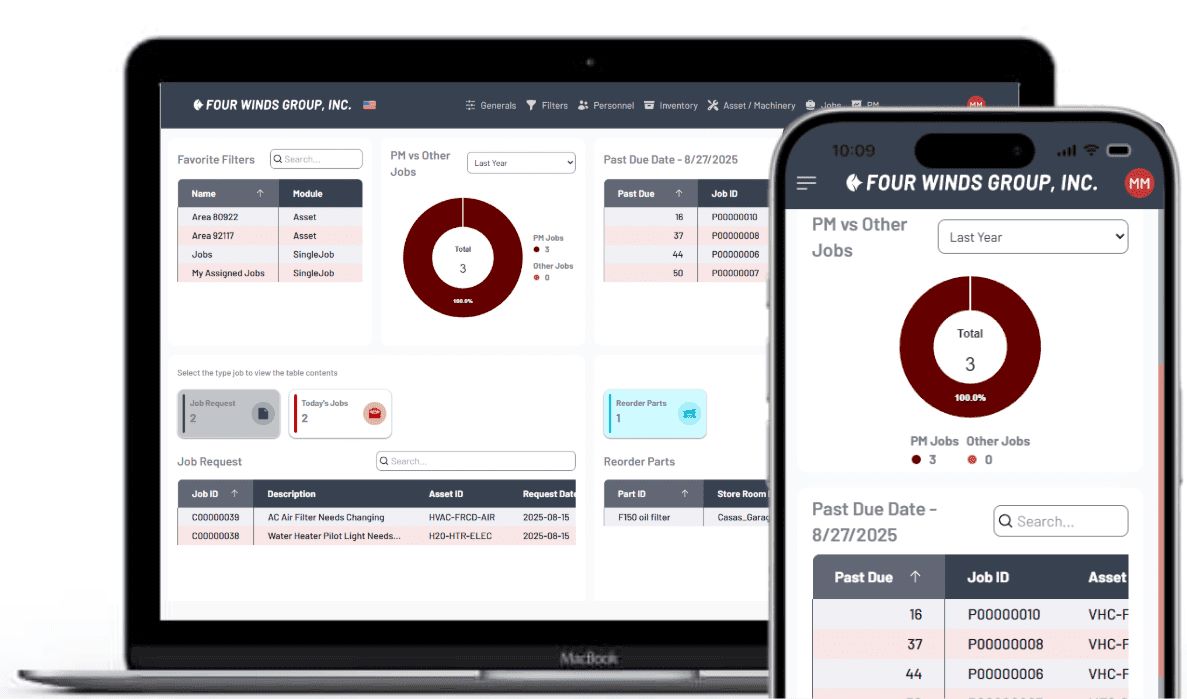
Manufacturing CMMS also supports inventory and spare parts management. Manufacturers can track spare parts availability, usage, and reorder points. By managing inventory within Manufacturing CMMS, facilities reduce waste and improve response times. Having the right parts available at the right time ensures maintenance tasks are completed efficiently.

Manufacturing CMMS allows multi-site manufacturers to manage maintenance operations from one platform. Maintenance leaders can compare performance, track downtime trends, and standardize maintenance processes across plants. This level of visibility improves consistency and supports continuous improvement initiatives.
Modern Manufacturing CMMS solutions also offer mobile accessibility. Technicians can view work orders, update task status, and record maintenance data directly from the shop floor. Manufacturing CMMS mobile functionality keeps teams connected and informed at all times.

Advanced reporting is a powerful component of Manufacturing CMMS software. Managers can analyze maintenance costs, downtime frequency, asset performance, and labor utilization. Manufacturing CMMS analytics provide actionable insights for long-term planning. Manufacturers gain measurable performance improvements through CMMS-driven insights.

Choosing the right Manufacturing CMMS supports long-term manufacturing success. Manufacturing CMMS grows with your facility as maintenance demands evolve. Whether transitioning from manual processes or replacing legacy software, Manufacturing CMMS offers a structured and user-friendly solution.

Manufacturing CMMS is suitable for manufacturers of all sizes and industries. Maintenance managers, plant managers, and operations leaders benefit from improved visibility and control. By improving maintenance efficiency and reducing unplanned downtime, manufacturers can maintain production schedules and meet customer demands more consistently.

As manufacturing environments become more complex, the role of Manufacturing CMMS continues to grow. It enables manufacturers to maintain equipment reliability while controlling costs and improving safety. Organizations that invest in Manufacturing CMMS gain a competitive advantage through improved asset performance and operational stability.

Manufacturing CMMS is not just a maintenance tool; it is a productivity enabler. By centralizing maintenance data, automating workflows, and providing actionable insights, Manufacturing CMMS empowers manufacturers to make smarter decisions and achieve sustainable growth. Manufacturers who adopt Manufacturing CMMS are better prepared to handle operational challenges and future demands.

Manufacturing CMMS

Manufacturing CMMS manufacturers ke liye ek powerful solution hai jo maintenance operations ko organized, predictable, aur efficient banata hai. Is system ki madad se manufacturers preventive maintenance plan kar sakte hain, equipment performance track kar sakte hain, aur unexpected breakdowns se hone wale downtime ko kaafi had tak kam kar sakte hain. Manufacturing CMMS maintenance teams ko real-time visibility deta hai jisse work orders, asset history, aur maintenance schedules ek hi jagah par manage ho jaate hain. Iska result hota hai better equipment reliability, kam maintenance cost, aur smoother production flow. Jo manufacturers apni operations ko long-term ke liye stable aur productive banana chahte hain, unke liye Manufacturing CMMS ek smart aur practical investment hai.

Software as a service (SaaS) is a cloud computer service design in which a supplier provides application software to customers while handling the needed physical and software application resources. SaaS applications are accessed through either a web application or locally-installed software application. Unlike various other software program distribution versions, SaaS divides "the belongings and ownership of software program from its use." SaaS use started around 2000, and by 2023 was the major type of software program application release. Unlike the majority of self-hosted software products, just one variation of the software application exists and only one operating system and configuration is sustained. SaaS items commonly work on rented facilities as a solution (IaaS) or system as a solution (PaaS) systems consisting of hardware and often operating systems and middleware, to accommodate rapid increases in use while providing instant and continuous accessibility to customers. SaaS clients have the abstraction of limitless computer sources, while economy of scale drives down the expense. SaaS architectures are commonly multi-tenant; usually they share resources in between clients for performance, but occasionally they provide a siloed environment for an additional fee. Usual SaaS profits versions include freemium, membership, and usage-based costs. Unlike traditional software program, it is hardly ever possible to buy a perpetual certificate for a particular variation of the software. There are no particular software application development techniques that identify SaaS from various other application development, although there is commonly a concentrate on frequent testing and releases.

.

Property management is a systematic strategy to the governance and understanding of all worth for which a group or entity is liable. It might apply both to concrete possessions (physical things such as complicated process or manufacturing plants, framework, structures or equipment) and to intangible assets (such as copyright, goodwill or financial properties). Property monitoring is a methodical process of developing, operating, keeping, updating, and taking care of possessions in the most economical way (consisting of all prices, dangers, and performance features). Concept of asset management largely deals with the periodic issue of boosting, preserving or in other conditions ensuring the financial and funding worth of a property gradually. The term is typically utilized in design, business globe, and public framework sectors to make sure a collaborated technique to the optimization of prices, threats, service/performance, and sustainability. The term has typically been utilized in the monetary field to explain people and firms who manage financial investments in support of others. Those consist of, for instance, investment managers who manage the properties of a pension plan fund. The ISO 55000 series of standards, created by ISO TC 251, are the global criteria for Possession Monitoring. ISO 55000 provides an intro and needs spec for a management system for asset management. The ISO 55000 criterion specifies a possession as an "thing, point or entity that has potential or real value to a company". ISO 55001 defines needs for a possession management system within the context of the company, and ISO 55002 offers standards for the application of an asset administration system, based on the demands of ISO 55001.

.

The technological definition of upkeep entails functional checks, servicing, repairing or changing of required devices, devices, equipment, building framework and supporting energies in industrial, organization, and domestic installations. Terms such as "anticipating" or "intended" upkeep explain different cost-effective methods aimed at maintaining tools functional; these activities take place either before or after a prospective failure.

.

Venture possession monitoring (EAM) includes the management of the upkeep of physical assets of a company throughout each asset's lifecycle. EAM is utilized to prepare, enhance, implement, and track the required maintenance tasks with the linked priorities, abilities, materials, devices, and details. This covers the style, construction, appointing, operations, upkeep and decommissioning or substitute of plant, tools and facilities. The goal of EAM is to make the most of the value and effectiveness of these properties while minimizing linked expenses and dangers. "Venture" refers to the range of the possessions in an Enterprise throughout divisions, areas, centers and, possibly, sustaining service functions. Various assets are handled by the modern-day enterprises currently. The assets might be dealt with properties like buildings, plants, equipments or relocating possessions like automobiles, ships, relocating tools etc. The lifecycle monitoring of the high value physical possessions call for regressive preparation and execution of the job.

.

Workflow is a common term for managed and repeatable patterns of activity, enabled by the systematic company of sources into processes that change materials, offer solutions, or procedure information. It can be shown as a series of procedures, the work of an individual or team, the work of a company of personnel, or several simple or complex devices. From a much more abstract or higher-level perspective, workflow might be considered a view or representation of real job. The flow being described might describe a paper, solution, or item that is being transferred from one action to another. Operations might be viewed as one fundamental building block to be combined with various other components of an organization's framework such as infotech, teams, projects and pecking orders.

.

About San Diego

Frequently Asked Questions

Manufacturing CMMS is a computerized maintenance management system designed specifically for manufacturing facilities. It works by centralizing maintenance tasks such as work orders, preventive maintenance schedules, asset records, and equipment history in one system, making maintenance planning and execution more efficient.

Manufacturing CMMS reduces downtime by allowing maintenance teams to schedule preventive maintenance, track equipment condition, and identify potential issues before they turn into major failures. This proactive approach keeps production running smoothly.

Yes, Manufacturing CMMS is scalable and can be used by small, mid sized, and large manufacturing facilities. It adapts to different operation sizes and helps smaller teams manage maintenance with the same efficiency as larger organizations.

Manufacturing CMMS can manage a wide range of assets including production equipment, machinery, tools, utilities, and facility infrastructure. It stores maintenance history, manuals, warranties, and performance data for each asset.

Preventive maintenance is a core function of Manufacturing CMMS. The system automatically schedules inspections and servicing based on time, usage, or condition, helping manufacturers avoid unexpected breakdowns and costly repairs.

Manufacturing CMMS improves productivity by reducing paperwork, organizing work orders, improving task prioritization, and giving technicians easy access to maintenance information. This allows teams to focus more on actual maintenance work.

Implementation time varies based on facility size and data readiness, but most modern Manufacturing CMMS solutions are designed for fast deployment with minimal disruption to daily operations.