
Manufacturing CMMS Software for Preventive Maintenance

Manufacturing CMMS Software for Preventive Maintenance

Manufacturing CMMS for maintenance operations turns complexity into clarity.

Manufacturing CMMS has become a critical tool for manufacturers looking to improve maintenance efficiency and gain better control over their equipment and assets. As manufacturing operations continue to evolve, companies can no longer rely on outdated systems to manage equipment reliability. Manufacturing CMMS provides a centralized platform to manage maintenance activities, track assets, schedule preventive maintenance, and reduce unexpected downtime across production facilities.

Manufacturing CMMS helps organizations transition from reactive maintenance to preventive and planned maintenance models.

Manufacturing CMMS for maintenance operations turns complexity into clarity.

  • Manufacturing CMMS for maintenance automation saves time and reduces human error.
  • Manufacturing CMMS For Production Reliability
Rather than dealing with costly equipment failures, maintenance teams can detect warning signs in advance. This reduces downtime and helps ensure that production lines operate smoothly without interruption. Manufacturing CMMS plays a vital role in supporting operational efficiency and long-term equipment performance.

Preventive maintenance is a core strength of Manufacturing CMMS software. Manufacturers can schedule maintenance tasks based on time, usage, or condition. This approach extends equipment lifespan while lowering overall maintenance costs. Manufacturing CMMS ensures that maintenance activities are consistent, documented, and aligned with production demands.

Manufacturing CMMS for maintenance operations turns complexity into clarity.

With Manufacturing CMMS, manufacturers gain complete insight into asset lifecycle data. Maintenance teams can access service records, warranties, manuals, and inspection logs from a single system. This centralized access allows better decision-making and planning. Manufacturing CMMS helps organizations protect their investments and maximize return on equipment assets.

Manufacturing CMMS simplifies work order creation and tracking. Teams can manage work orders efficiently using a centralized dashboard. Manufacturing CMMS to Reduce Equipment Downtime . This reduces paperwork and improves communication between maintenance teams and operations staff. Manufacturing CMMS helps ensure that no task is missed and every maintenance activity is properly documented.
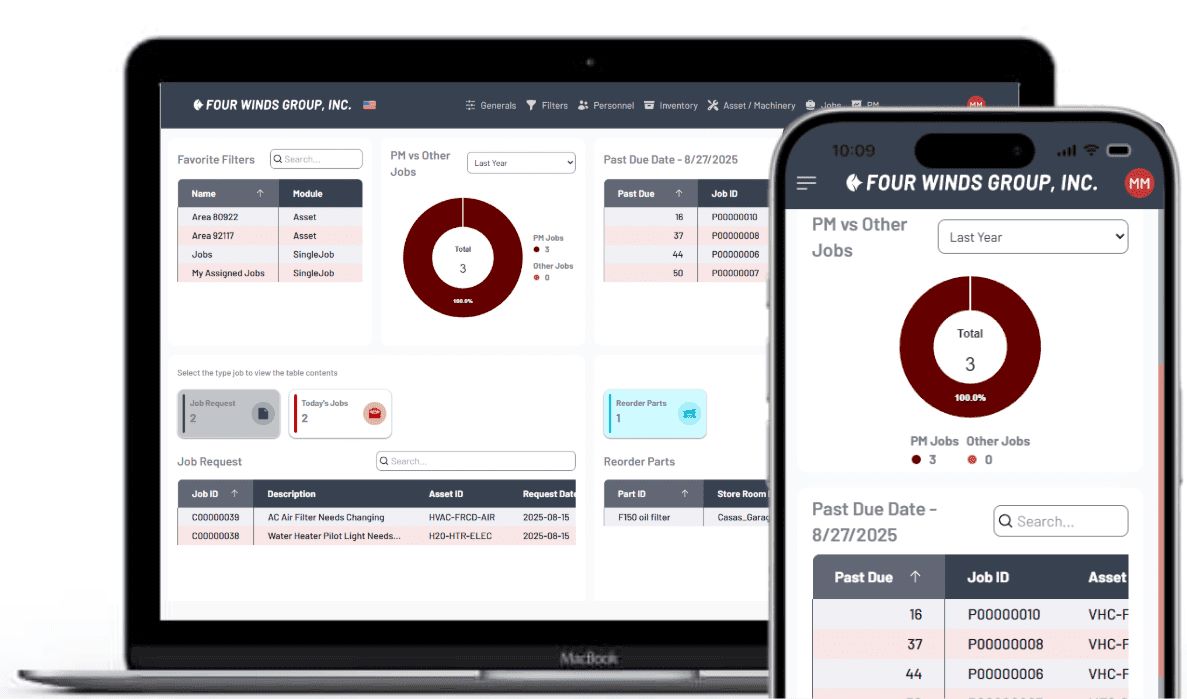
Manufacturing CMMS also supports inventory and spare parts management. Manufacturers can track spare parts availability, usage, and reorder points. By managing inventory within Manufacturing CMMS, facilities reduce waste and improve response times. Having the right parts available at the right time ensures maintenance tasks are completed efficiently.

For manufacturers operating multiple facilities, Manufacturing CMMS provides centralized oversight across locations. Maintenance leaders can compare performance, track downtime trends, and standardize maintenance processes across plants. This level of visibility improves consistency and supports continuous improvement initiatives.

Mobile access is an important feature of today’s Manufacturing CMMS platforms. Technicians can view work orders, update task status, and record maintenance data directly from the shop floor. This real-time access improves data accuracy and speeds up maintenance response times.

Manufacturing CMMS supports data-driven decision-making through reporting and analytics. Managers can analyze maintenance costs, downtime frequency, asset performance, and labor utilization. Manufacturing CMMS analytics provide actionable insights for long-term planning. Manufacturers gain measurable performance improvements through CMMS-driven insights.

Choosing the right Manufacturing CMMS supports long-term manufacturing success. The system is designed to scale with business growth and adapt to changing operational needs. Whether transitioning from manual processes or replacing legacy software, Manufacturing CMMS offers a structured and user-friendly solution.

From small production facilities to large industrial plants, Manufacturing CMMS delivers value. CMMS For Machinery Maintenance Manufacturing CMMS supports teams at every level of the organization. By improving maintenance efficiency and reducing unplanned downtime, manufacturers can maintain production schedules and meet customer demands more consistently.

Manufacturing CMMS has become a foundational tool for modern manufacturing operations. It enables manufacturers to maintain equipment reliability while controlling costs and improving safety. Organizations that invest in Manufacturing CMMS gain a competitive advantage through improved asset performance and operational stability.

Beyond maintenance, Manufacturing CMMS contributes to overall operational excellence. By centralizing maintenance data, automating workflows, and providing actionable insights, Manufacturing CMMS empowers manufacturers to make smarter decisions and achieve sustainable growth. Manufacturers who adopt Manufacturing CMMS are better prepared to handle operational challenges and future demands.

Manufacturing CMMS

Manufacturing CMMS manufacturers ke liye ek powerful solution hai jo maintenance operations ko organized, predictable, aur efficient banata hai. Is system ki madad se manufacturers preventive maintenance plan kar sakte hain, equipment performance track kar sakte hain, aur unexpected breakdowns se hone wale downtime ko kaafi had tak kam kar sakte hain. Manufacturing CMMS maintenance teams ko real-time visibility deta hai jisse work orders, asset history, aur maintenance schedules ek hi jagah par manage ho jaate hain. Iska result hota hai better equipment reliability, kam maintenance cost, aur smoother production flow. Jo manufacturers apni operations ko long-term ke liye stable aur productive banana chahte hain, unke liye Manufacturing CMMS ek smart aur practical investment hai.

Industrial design (IE) is interested in the design, renovation and setup of integrated systems of people, materials, info, devices and power. It draws upon specialized understanding and ability in the mathematical, physical, and social scientific researches along with the principles and techniques of design analysis and style, to specify, predict, and review the outcomes to be obtained from such systems. Industrial engineering is a branch of design that focuses on enhancing complex processes, systems, and organizations by improving effectiveness, efficiency, and high quality. It combines concepts from engineering, mathematics, and service to layout, analyze, and take care of systems that include individuals, materials, details, equipment, and energy. Industrial designers intend to decrease waste, simplify operations, and enhance general efficiency across numerous industries, including production, medical care, logistics, and solution markets. Industrial engineers are employed in countless markets, such as vehicle manufacturing, aerospace, healthcare, forestry, finance, leisure, and education. Industrial engineering incorporates the physical and social sciences together with engineering principles to enhance processes and systems. Numerous commercial design concepts are followed to ensure the efficient flow of systems, procedures, and operations. Industrial designers function to improve quality and efficiency while at the same time cutting waste. They make use of principles such as lean manufacturing, 6 sigma, information systems, process ability, and more. These principles enable the creation of new systems, processes or scenarios for the beneficial sychronisation of labor, materials and machines. Relying on the subspecialties included, industrial engineering might also overlap with, procedures research study, systems engineering, manufacturing engineering, manufacturing engineering, supply chain engineering, procedure design, monitoring science, design management, comfort designs or human factors design, safety and security engineering, logistics engineering, quality engineering or various other relevant capabilities or fields.

.

Software program as a solution (SaaS) is a cloud computer solution model in which a supplier supplies software to clients while managing the required physical and software sources. SaaS applications are accessed by means of either a web application or locally-installed software program. Unlike various other software application delivery versions, SaaS divides "the ownership and possession of software program from its use." SaaS usage began around 2000, and by 2023 was the primary type of software program application deployment. Unlike the majority of self-hosted software products, just one version of the software program exists and just one running system and setup is sustained. SaaS items typically work on leased facilities as a service (IaaS) or platform as a solution (PaaS) systems including hardware and in some cases running systems and middleware, to fit fast rises in usage while providing split second and constant accessibility to customers. SaaS consumers have the abstraction of endless computing resources, while economy of scale drives down the price. SaaS architectures are commonly multi-tenant; typically they share resources in between clients for efficiency, however in some cases they supply a siloed setting for an additional charge. Usual SaaS profits models include freemium, membership, and usage-based fees. Unlike typical software application, it is rarely feasible to get a continuous certificate for a specific version of the software program. There are no specific software program development techniques that differentiate SaaS from various other application growth, although there is frequently a concentrate on regular testing and launches.

.

Enterprise possession administration (EAM) entails the administration of the maintenance of physical assets of a company throughout each asset's lifecycle. EAM is made use of to intend, enhance, perform, and track the required maintenance activities with the associated concerns, abilities, products, devices, and information. This covers the design, construction, appointing, operations, upkeep and decommissioning or substitute of plant, devices and facilities. The objective of EAM is to optimize the value and efficiency of these possessions while lessening linked prices and threats. "Business" describes the scope of the assets in a Venture across divisions, areas, centers and, possibly, supporting service features. Various properties are managed by the modern enterprises currently. The possessions may be repaired properties like buildings, plants, equipments or moving possessions like vehicles, ships, relocating equipments and so on. The lifecycle administration of the high value physical properties call for regressive planning and implementation of the job.

.

A computerized maintenance administration system (CMMS) is any software package that maintains a computer system database of info regarding a company's maintenance operations. This info is meant to help upkeep employees do their work better (for instance, identifying which makers require upkeep and which storerooms contain the extra components they require) and to aid administration make informed decisions (as an example, determining the price of maker break down repair service versus precautionary upkeep for each device, potentially leading to far better allotment of sources). CMMS data may additionally be made use of to verify regulative compliance. To appropriately manage the upkeep of a facility, info is needed to evaluate what is occurring. Manually, this requires a tremendous amount of initiative and time. A CMMS likewise permits record maintaining, to track completed and appointed jobs in a timely and economical fashion.

.

Process is a common term for managed and repeatable patterns of task, enabled by the organized organization of resources right into procedures that change products, give services, or procedure details. It can be shown as a series of operations, the job of an individual or group, the work of a company of personnel, or one or more simple or complex mechanisms. From an extra abstract or higher-level viewpoint, operations might be taken into consideration a view or depiction of actual job. The circulation being explained might describe a document, solution, or item that is being moved from one step to another. Workflows might be viewed as one basic foundation to be incorporated with other parts of an organization's structure such as information technology, teams, tasks and power structures.

.

About San Diego

Frequently Asked Questions

Manufacturing CMMS is a computerized maintenance management system designed specifically for manufacturing facilities. It works by centralizing maintenance tasks such as work orders, preventive maintenance schedules, asset records, and equipment history in one system, making maintenance planning and execution more efficient.

Manufacturing CMMS reduces downtime by allowing maintenance teams to schedule preventive maintenance, track equipment condition, and identify potential issues before they turn into major failures. This proactive approach keeps production running smoothly.

Yes, Manufacturing CMMS is scalable and can be used by small, mid sized, and large manufacturing facilities. It adapts to different operation sizes and helps smaller teams manage maintenance with the same efficiency as larger organizations.

Manufacturing CMMS can manage a wide range of assets including production equipment, machinery, tools, utilities, and facility infrastructure. It stores maintenance history, manuals, warranties, and performance data for each asset.

Preventive maintenance is a core function of Manufacturing CMMS. The system automatically schedules inspections and servicing based on time, usage, or condition, helping manufacturers avoid unexpected breakdowns and costly repairs.

Manufacturing CMMS improves productivity by reducing paperwork, organizing work orders, improving task prioritization, and giving technicians easy access to maintenance information. This allows teams to focus more on actual maintenance work.

Implementation time varies based on facility size and data readiness, but most modern Manufacturing CMMS solutions are designed for fast deployment with minimal disruption to daily operations.